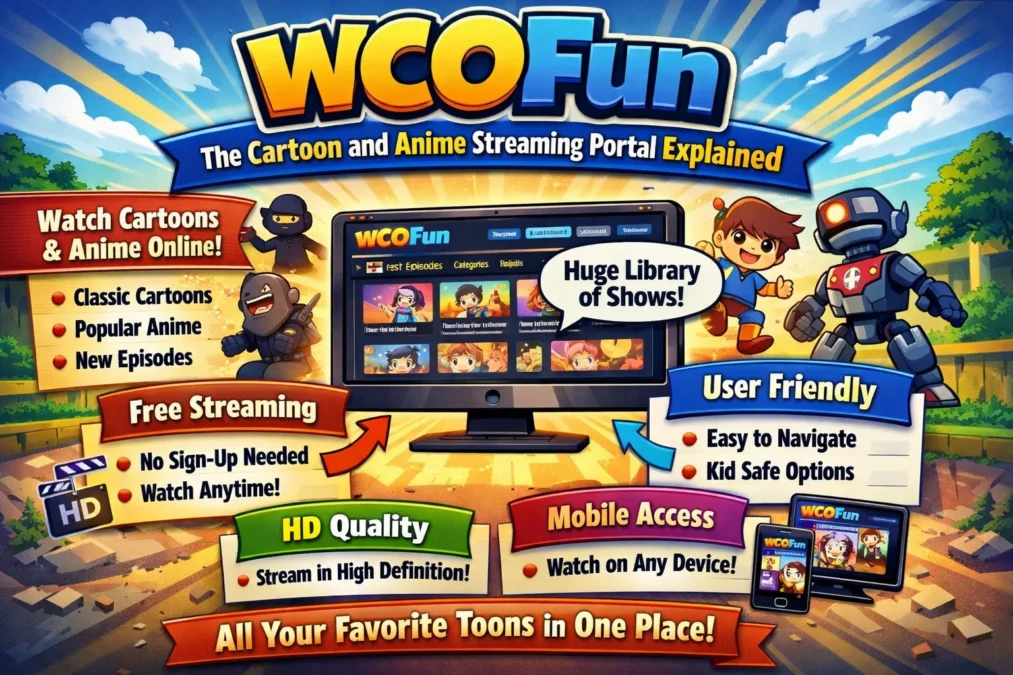
WCOFun: The Cartoon and Anime Streaming Portal Explained
In the vast, ever-expanding universe of online entertainment, finding a dedicated haven for animation lovers can feel like a quest. For countless fans around the globe, that haven has often been WCOFun.net, a website that emerged as a prominent, free-to-access streaming portal for cartoons and anime. Its very name became a shorthand for a specific kind of digital discovery: a place where classic childhood cartoons sat side-by-side with the latest anime series, all available without a subscription fee. The rise and presence of WCOFun tell a broader story about viewer demand, the complexities of digital content distribution, and the evolving landscape of how we consume animated media. This deep dive isn’t just about cataloging a website; it’s an exploration of the ecosystem it represented, the reasons behind its popularity, the significant risks involved, and the important conversations it sparks about supporting the creators behind the content we love.

For the uninitiated, stumbling upon WCOFun could feel like unlocking a treasure chest. The interface, often crowded and ad-heavy, promised an almost overwhelming selection. From iconic 80s and 90s Western animation to niche anime titles never licensed in other regions, the library was its main draw. It operated in a grey area, aggregating content hosted elsewhere and providing a centralized, searchable directory for users. This model filled a gap for viewers frustrated by geo-restrictions, fractured licensing across dozens of paid platforms, or simply lacking the means to pay for multiple streaming services. However, navigating this world requires a clear-eyed understanding. Using sites like WCOFun is not without its perils, from exposing devices to malicious software to the fundamental ethical and legal issues of copyright. This article will serve as your comprehensive guide to understanding the WCOFun phenomenon—its appeal, its mechanics, its dangers, and the legitimate alternatives that ensure the vibrant world of animation continues to thrive.
The Allure of the Infinite Library: What Drew Users to WCOFun
The primary magnet pulling users toward WCOFun was undeniably its vast, seemingly limitless catalog. In an era where streaming giants like Netflix, Hulu, and Crunchyroll operate with rotating libraries dictated by complex licensing agreements, WCOFun presented itself as a permanent archive. A user could feasibly start a deep dive into the entire run of a classic series like “Dexter’s Laboratory” one day and switch to a complete binge of a current anime season the next, all on the same site. This sense of comprehensiveness and permanence is powerful for dedicated fans. There’s no fear of a favorite title “leaving the service” next month, a common annoyance on legitimate platforms.
Beyond breadth, WCOFun offered unparalleled accessibility. It required no account creation, no credit card, and no subscription. For viewers in regions where popular streaming services are unavailable or prohibitively expensive, or for those who cannot afford another monthly bill, this barrier-free access was a significant factor. The site also acted as a discovery tool for obscure titles. Many anime series, particularly older ones, have never received official Western releases or digital licensing. WCOFun, by aggregating fan-sourced content, often served as one of the few places where international audiences could access these shows, albeit without permission from the copyright holders. This combination of volume, convenience, and cost (free) created a compelling, if ethically fraught, value proposition for a global audience.
Understanding the Mechanics: How Sites Like WCOFun Operate
It’s crucial to understand that WCOFun itself was not a massive server farm hosting petabytes of cartoon data. Instead, it operated as an aggregator or indexing site. Think of it less as a library and more as a card catalog that points to books held in other, often shadowy, locations across the internet. The site’s backend would scrape and collect links to video files hosted on third-party servers—places like open video platforms, cyberlockers, or other streaming sites. When you clicked play on WCOFun, you were typically being redirected to one of these external hosts, which then served the video stream to your browser.
This model explains several characteristics of the WCOFun experience. The video quality could be highly inconsistent, varying from link to link. Streams would sometimes buffer endlessly, fail, or disappear entirely as external hosts were taken down. The omnipresent and aggressive advertising was the site’s primary revenue model. By generating massive traffic, WCOFun could sell ad space, often deploying pop-ups, pop-unders, and redirects that were notorious for leading to malicious or scam websites. This indirect hosting method also provided a layer of deniability for the site operators, though it did not make the site legal. They argued they were merely linking to content, not hosting it, but copyright law in many jurisdictions still holds such indexing sites liable for facilitating mass copyright infringement.
The Ever-Present Risks: Security, Legal, and Ethical Concerns
Engaging with WCOFun or similar sites is not a risk-free activity. The most immediate danger is to your own cybersecurity. The advertising networks used by these sites are rarely vetted and are hotbeds for malware, ransomware, and phishing scams. A single misclick on a deceptive “play” button or pop-up ad could lead to a drive-by download that infects your device with software designed to steal personal data, encrypt your files for ransom, or hijack your system for crypto-mining. Using strong ad-blockers might mitigate some risk, but it is not a foolproof solution, as the sites often employ anti-adblock scripts.
The legal and ethical concerns run even deeper. Streaming copyrighted content without a license is illegal in most countries. While individual viewers are rarely prosecuted (with enforcement focused on site operators and uploaders), you are still participating in an ecosystem that directly harms creators. The animation industry, from giant studios to independent anime producers, relies on licensing revenue, merchandise sales, and subscription fees to fund future projects. When a series is widely available for free on sites like WCOFun, its official viewership and revenue plummet. This can lead to cancellations, studios shutting down, and animators—already a notoriously overworked and underpaid profession—facing even more precarious conditions. As one industry commentator noted:
“Every view on an illicit site isn’t just a lost sale; it’s a vote that says the work of hundreds of artists, writers, and voice actors has no monetary value. It undermines the entire economic model that allows new stories to be told.”
The Cat-and-Mouse Game: Domain Changes and Mirror Sites
A defining feature of the life cycle of WCOFun has been its digital shape-shifting. Copyright holders and anti-piracy organizations routinely issue takedown notices and work with internet service providers to block or seize domain names. As a result, the main WCOFun.net address would frequently become inaccessible. The response from the site’s operators was typically to launch a succession of mirror sites or new domains, such as WCOFun.tv, WCOFun.org, or various other slight permutations.
This created a whack-a-mole scenario for authorities and a point of confusion for users. For the dedicated visitor, communities on social media platforms or forums would often spring up to share the latest working URL. This constant migration highlights the inherently unstable nature of such platforms. A bookmark was never permanent; a favorite site could vanish overnight. It also served as a constant reminder of the site’s legal precariousness. The practice of hopping between domains is a common survival tactic for sites operating in legal grey areas, ensuring continuity of service (and ad revenue) even as individual web addresses fall.
Navigating the User Experience: Interface and Content Organization
For all its legal issues, examining the user experience of WCOFun is instructive. The interface was typically functional but far from polished. The homepage was often crowded with thumbnails, categorized by genre (Anime, Cartoons, TV Shows), popularity, or latest additions. Search functionality was a key feature, allowing users to jump directly to a specific title. The video player page itself was usually barebones, offering basic play/pause controls and, if you were lucky, a quality selector. The real estate around the player, however, was a jungle of advertising.
The organization of content revealed the site’s community-driven, aggregator nature. You might find multiple links or “mirrors” for a single episode, offering different host servers. This was a workaround for when links died. The catalogs were surprisingly well-curated in terms of completeness; it was common to find every episode of a long-running series, neatly ordered. However, metadata like synopses, original air dates, or studio information was often sparse or copied from other sources. The experience was utilitarian: it prioritized access over ambiance, a stark contrast to the sleek, branded interfaces of legal services like Disney+ or HBO Max.
The Genre Spectrum: From Classic Cartoons to Niche Anime
The content library of WCOFun was its crown jewel, spanning decades and continents. On the Western animation side, it served as a digital museum for classic cartoons. Generations who grew up with Saturday morning line-ups on Kids’ WB or Cartoon Network could find nearly every show they remembered: “Batman: The Animated Series,” “Johnny Bravo,” “Rugrats,” “X-Men: The Evolution,” and hundreds more. This made it a powerful nostalgia engine.
The other major pillar was, of course, anime. The selection here was staggering, often surpassing legal platforms in sheer volume. It covered the entire spectrum: mega-popular shonen titles like “Naruto” and “One Piece,” critically acclaimed classics like “Cowboy Bebop,” current seasonal simulcasts, and obscure OVAs (Original Video Animations) from the 90s. For fans of specific genres—isekai, mecha, slice-of-life—WCOFun acted as a deep well to draw from. The table below illustrates the typical breadth found on such an aggregator site compared to a major legal service:
| Content Category | Examples Found on WCOFun | Notes on Legal Availability |
| Classic Western Animation | Hey Arnold!, CatDog, Dexter’s Lab, Powerpuff Girls | Scattered across Paramount+, HBO Max, Boomerang, often incomplete. |
| Modern Western Cartoons | Rick and Morty, Adventure Time, Steven Universe | Typically exclusive to Hulu, Max, Cartoon Network app, etc. |
| Mainstream/Popular Anime | Attack on Titan, Demon Slayer, My Hero Academia | Available on Crunchyroll, Funimation, Hulu, but may be split. |
| Classic & Niche Anime | Legend of the Galactic Heroes, Initial D, Rose of Versailles | Often unlicensed or out of print in the West; very hard to find legally. |
| Ongoing Seasonal Anime | Latest episodes of currently airing shows in Japan. | Legally available via Crunchyroll/Funimation simulcast, but region-locked. |
The Legal Streaming Landscape: Robust Alternatives Exist
The most important counterpoint to the WCOFun phenomenon is the reality that legal streaming options for animation have never been more abundant or high-quality. While it’s true that licensing can be fragmented, a combination of a few key services provides extensive, high-definition, and supported access to a vast majority of what fans seek. Crunchyroll, now merged with Funimation, is the undeniable titan for anime, boasting the world’s largest library with official simulcasts. HIDIVE caters to a more niche audience. For Western animation, Max (HBO Max) holds a deep Warner Bros. and Cartoon Network vault, while Disney+ is home to Disney, Pixar, and now a wealth of 20th Century Animation and Fox content like “The Simpsons.” Hulu and Paramount+ also have strong animation offerings.
The advantages of these legal platforms extend beyond just a clear conscience. They offer reliable, high-bitrate streams (often in 4K), professional subtitle and dubbing tracks, extra features, and curated discovery. They also directly fund the industry. A subscription to Crunchyroll is a direct investment in the anime production committee system, helping to fund future seasons and new original projects. Furthermore, many services offer free, ad-supported tiers (like Crunchyroll and Pluto TV’s animation channels) or affordable student discounts, addressing the cost barrier that drives some to sites like WCOFun.
The Safety Playbook: If You Choose to Venture (Not Recommended)
Given the risks, the only truly safe advice is to avoid sites like WCOFun altogether. However, for those who choose to proceed despite the warnings, a stringent safety protocol is non-negotiable. First and foremost, a comprehensive ad-blocker (like uBlock Origin) and a robust, up-to-date antivirus/anti-malware program are essential. Using a VPN can provide an additional layer of privacy by masking your IP address from both the site and any malicious actors, though it does not make streaming illegal content legal.
Secondly, never disable your browser’s security settings or allow notifications from such sites. Be hyper-vigilant about clicks; the real “play” button is often surrounded by dozens of deceptive fake buttons. Use a secondary browser or a virtual machine if possible, to isolate any potential infection from your main system and personal data. Perhaps the most important tip is to never, under any circumstances, download any “required” video players or browser extensions promoted on the page—these are almost always malware in disguise. Remember, the cost of dealing with a ransomware attack or identity theft far outweighs the price of a few legal streaming subscriptions.
The Community and Cultural Impact
Beyond the mere act of streaming, WCOFun existed within a broader fan ecosystem. It was a tool that facilitated binge-watching marathons, the discovery of cult classics, and the ability for international fans to participate in global conversations about ongoing series simultaneously. In the absence of accessible legal options, it created a form of de facto access that shaped viewing habits. For some, it was an introductory gateway into the worlds of anime and cartoons that later led them to become paying supporters of the industry.
However, this cultural impact is deeply double-edged. While it fostered community in one sense, it also normalized copyright infringement on a massive scale. It contributed to a mindset where immediate, free access is expected, undermining the perceived value of creative work. The discussions in forums about “where to watch” often centered on finding the most convenient free source, with little consideration for the sustainability of the creation process. This cultural shift presents a significant challenge for the entertainment industry as it tries to monetize digital viewership in the age of instant gratification.
The Future of Free Streaming and Industry Response
The future of sites operating in the WCOFun model is one of constant pressure and adaptation. The industry’s response has been two-pronged: litigation and offering better alternatives. Anti-piracy coalitions continue to pursue legal action, pushing for domain seizures and stricter regulations. Simultaneously, the push for global licensing is key. When a show is available legally worldwide at the same time, the incentive to seek out pirated copies drops dramatically. Services like Crunchyroll and Netflix are aggressively pursuing this strategy.
The concept of “free” will also evolve. Ad-supported legal tiers (AVOD) are becoming more prevalent, as seen with Crunchyroll, Tubi, and Pluto TV. These platforms offer a legitimate, safer version of the free model that WCOFun provided, complete with ads but with legal permission and better quality. The industry’s goal is to make legal access so convenient, affordable, and comprehensive that the risks and drawbacks of pirate sites outweigh their perceived benefits. The long-term viability of aggregation sites like WCOFun depends on the failures of the legal market to meet consumer demand. As that gap closes, their relevance inevitably wanes.
Conclusion
WCOFun represented a specific moment in internet culture—a response to a market gap for animated content. It was a portal built on the twin engines of vast consumer demand and the technical ease of digital aggregation. Its story is one of accessibility versus ethics, convenience versus security, and community versus copyright. While it provided a temporary solution for viewers frustrated by geo-blocks and subscription fatigue, it did so at a high cost: exposing users to danger and diverting essential revenue from the creative industries that produce the very content fans cherish.
The landscape is shifting. Legal streaming services are expanding their libraries, improving global access, and developing more flexible pricing models. The conversation is moving from “Where can I find this for free?” to “What is the best, safest, and most supportive way to watch?” Understanding the full picture of WCOFun—its appeal, its mechanisms, and its consequences—empowers viewers to make informed choices. Ultimately, supporting the official releases is an investment in the future, ensuring that the artists, writers, and studios can continue to tell the stories that captivate us in a way that is sustainable and secure for everyone involved.
Frequently Asked Questions (FAQs)
Is WCOFun legal to use?
The legality of using WCOFun is highly questionable and generally falls on the side of being illegal in most jurisdictions. The site does not hold distribution licenses for the vast majority of the content it provides access to. While enforcement typically targets the website operators and uploaders rather than individual viewers, streaming copyrighted material without permission is a violation of copyright law. You are accessing content that is not being offered legally or freely by its rights holders.
Why does WCOFun have so many pop-up ads and redirects?
WCOFun relies almost entirely on aggressive advertising revenue to operate and, presumably, generate profit for its owners. Since it does not charge subscription fees, its income comes from pay-per-click and pop-up ad networks. These networks are often unvetted and used by malicious actors to distribute malware, phishing scams, and unwanted software. The constant redirects are a deliberate part of this ad-serving model, designed to generate as many page views and clicks as possible, despite severely degrading the user experience and posing serious security risks.
Can I get in trouble with my internet provider for using WCOFun?
It is possible. Many Internet Service Providers (ISPs) monitor for copyright infringement activity, especially if they receive takedown notices from copyright holders. While a single viewer is less likely to face a lawsuit, you could receive a warning notice from your ISP, sometimes leading to throttled internet speeds or, in repeat cases, service termination. Using a VPN might hide this activity from your ISP, but it does not change the fundamental illegality of accessing the content and does not protect you from the malware risks on the site itself.
What are the best legal alternatives to WCOFun for cartoons and anime?
Excellent legal alternatives exist. For a comprehensive anime library, Crunchyroll (which includes Funimation’s content) is the industry leader. HIDIVE offers great niche titles. For Western cartoons, Max has a deep Cartoon Network and Warner Bros. archive, Disney+ covers Disney/Pixar/Fox, and Hulu and Paramount+ have strong selections. Netflix also produces and licenses a growing number of animations. Many of these, including Crunchyroll and Pluto TV, offer free, ad-supported tiers, providing a safe and legal “free” option.
How can I watch older or obscure anime that isn’t on any legal platform?
This is a genuine challenge. For out-of-print or unlicensed titles, your best and most ethical bet is to purchase physical media (DVDs/Blu-rays) if available from second-hand markets. Some older series see re-releases through boutique publishers. You can also advocate for licensing by expressing interest on official platform forums or social media. While the temptation to use a site like WCOFun for these rarities is high, it’s important to remember that even obscure works have rights holders, and piracy can further discourage any company from investing in an official release.