The Ultimate Guide to Choosing the Perfect Bathroom Vanity Mirror
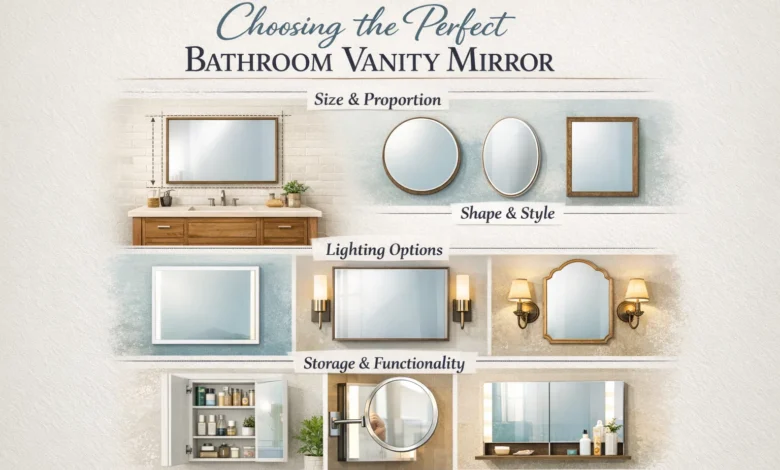
Bathroom Vanity Mirror: Let’s be honest for a second. You have probably spent hours picking out the perfect tile, agonizing over the right faucet finish, and maybe even losing sleep over the exact shade of white for your walls. But when it comes to the bathroom vanity mirror, it often becomes an afterthought—a quick grab from a big box store that sort of fits. That is a mistake I see all too often, and honestly, it is the number one way to leave your bathroom remodel feeling just a little bit… off.


Your bathroom vanity mirror is not just a tool for checking your teeth for spinach or fixing your hair before a Zoom call. It is the anchor of your bathroom’s design. It controls the light, defines the space, and sets the mood for your entire morning routine. Whether you are a seasoned interior design junkie or a DIY newbie trying to survive a home renovation, getting this choice right changes everything. In this guide, we are going to dig deep into every detail—size, shape, tech, and style—so you can walk away feeling like a pro who just made the best decision for your home.
Finding the Perfect Size and Proportion for Your Bathroom Vanity Mirror
The single biggest mistake I see people make is buying a mirror that is simply too small for their setup. You might have a gorgeous 60-inch double vanity, but if you slap a tiny 24-inch decorative mirror in the middle of it, the whole room looks unbalanced. Think of your bathroom vanity mirror as the partner to your countertop. They need to look good together.
The general rule of thumb is that your mirror should be at least a few inches narrower than your vanity, but ideally, it should be close to the same width. If you are using a single large mirror over a double sink, you want it to span most of the length of the countertop, leaving just a few inches of breathing room on the sides. For two separate mirrors over a double vanity, each mirror should be centered over its respective sink. In this case, the width of the individual mirrors should match the width of the vanity area below them, usually keeping the outer edges in line with the sink’s edges.
Height is just as critical. You aren’t hanging a picture at eye level here; you are hanging a functional tool. The center of the bathroom vanity mirror should generally sit right around 60 to 63 inches off the floor. This puts the reflection right in the sweet spot for the average person. However, if you are tall or if your partner is on the shorter side, you might need to adjust. Also, pay attention to the gap between the faucet and the mirror. You want to leave about 4 to 6 inches of space between the top of the faucet or the backsplash and the bottom edge of the mirror to avoid a cramped look.
Rectangular, Round, or Arched: Decoding Mirror Shapes
Shapes are the unsung heroes of bathroom design. The shape of your bathroom vanity mirror dictates the vibe of the entire room, often without the homeowner even realizing why the room feels so good. If you want a space that feels custom and curated, do not just default to the basic rectangle. Think about what is happening in the rest of the room.
If your bathroom is full of hard angles—square tiles, sharp countertops, boxy cabinets—introducing a round or oval mirror is a fantastic way to soften the space. A circular bathroom vanity mirror breaks up the rigidity and adds a touch of modern elegance. It draws the eye and creates a focal point that feels fresh. Conversely, if you have a lot of curves in your fixtures or a freestanding tub that is very organic, a sharp, square, or hexagonal mirror can provide the necessary contrast to keep the room from feeling too mushy or undefined.
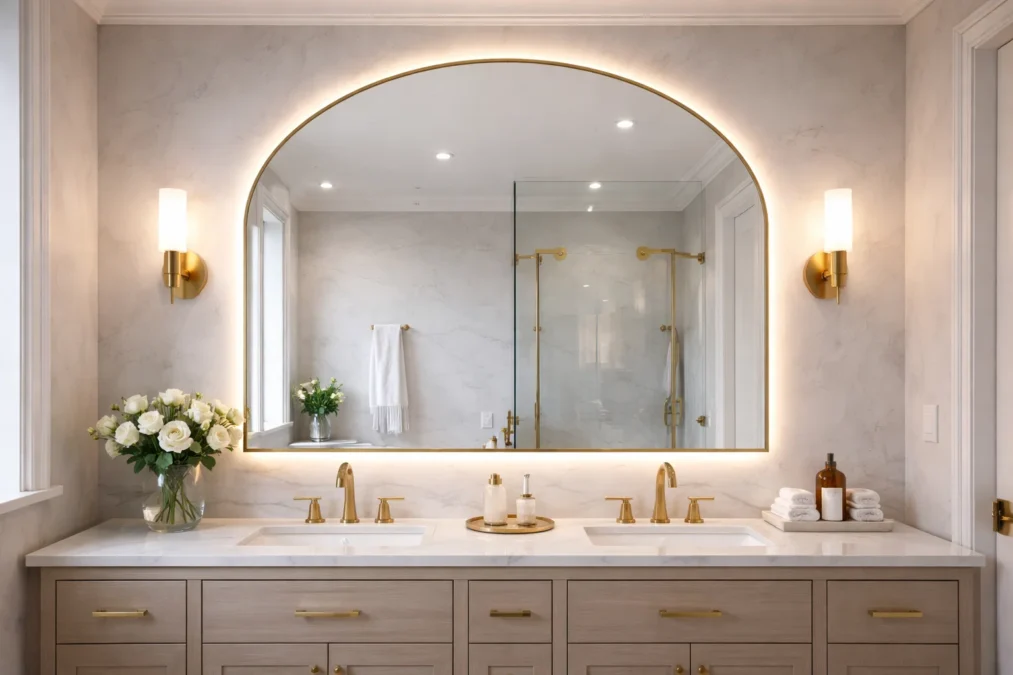
Right now, arched mirrors are having a massive moment, and for good reason. An arched bathroom vanity mirror mimics the look of a window or a doorway, which naturally draws the eye upward. If you have low ceilings or a narrow space, an arched mirror can make the room feel significantly taller and more expansive. It adds a touch of old-world charm mixed with contemporary cool that is hard to beat.
Framed vs. Frameless: Defining Your Aesthetic
Here is where your personality really gets to shine. The decision between a framed and a frameless bathroom vanity mirror is usually a battle between warmth and minimalism. There is no right or wrong answer here, but there is a “right for your style” answer.
Frameless mirrors are the champions of modern and contemporary design. They offer a sleek, clean line that disappears into the wall. Because there is no frame to trap dust or moisture, they are incredibly easy to wipe down and maintain. If your bathroom has bold wallpaper, colorful tile, or a very intricate vanity, a frameless mirror acts as a neutral party that doesn’t compete for attention. It is the quiet, confident choice.
Framed mirrors, on the other hand, bring the texture. A thick wooden frame can add warmth and a rustic, spa-like vibe to a bathroom. A thin, brushed brass or matte black metal frame adds a touch of industrial glam or vintage flair. The frame of your bathroom vanity mirror is also a great place to tie in your hardware finishes. If your faucet is chrome and your cabinet pulls are nickel, bringing a nickel-framed mirror into the mix creates a cohesive, professionally designed look.
Why Lighting Integration Is a Game Changer
Let’s talk about the glow. Standard bathroom lighting usually comes from a single fixture above the mirror or a couple of sconces on the sides. But when you integrate lighting directly into the bathroom vanity mirror, you unlock a level of illumination that is simply superior. This is where the magic of modern technology meets everyday utility.
Backlit mirrors are the gold standard right now. By placing the LED strips behind the glass, the mirror casts a soft, even halo of light onto the wall and out into the room. This eliminates harsh shadows on your face, which is a lifesaver for applying makeup or shaving. You get a shadow-free, even glow that makes the room feel soft and inviting. Many of these mirrors also offer a high Color Rendering Index (CRI) of 90 or above, meaning the light shows colors accurately. No more walking outside and realizing your foundation is three shades too dark.
Front-lit or perimeter-lit mirrors put the LEDs right on the face of the glass. These provide very direct, bright light. The best part about modern lighted bathroom vanity mirrors is the technology packed inside. You will often find touch sensors that allow you to switch between warm, natural, and cool light temperatures (like 3000K, 4500K, and 6400K). This lets you adjust the mood from a relaxing bath vibe to high-energy morning prep mode with just a tap.
The Magic of Anti-Fog and Smart Features
There is nothing quite as annoying as stepping out of a hot shower, looking up to brush your teeth, and seeing nothing but a sheet of steam staring back at you. This is why the anti-fog feature is not a luxury; for many of us, it is a necessity. A bathroom vanity mirror equipped with an anti-fog or demister pad is a total quality-of-life upgrade.
Here is how it works: a thin heating element is attached to the back of the mirror glass. When you turn it on (often via a dedicated touch button on the mirror face), it gently warms the glass just enough to prevent condensation from forming. It keeps your reflection crystal clear, no matter how steamy your shower gets. This is especially useful in bathrooms that lack powerful ventilation fans.
But why stop there? The modern bathroom vanity mirror is turning into a smart hub. We are seeing models with integrated Bluetooth speakers so you can listen to your morning podcast right from the mirror. Some have motion sensors that automatically turn the lights on when you walk into the room at night. Others even include wireless charging pads right in the base of the frame or digital displays showing the time, temperature, and humidity. It sounds futuristic, but it is available right now, and it turns your daily routine into a high-tech experience.
Storage Solutions: The Mirrored Medicine Cabinet
Sometimes, the best mirror is one that hides your mess. If your bathroom counter is constantly covered in toothpaste tubes, serums, and hair products, you need a bathroom vanity mirror that also functions as a medicine cabinet. These are the unsung heroes of small space organization.
A mirrored cabinet allows you to have the reflective surface you need while gaining 3 to 5 inches of depth for storage behind the glass. You can keep your daily essentials tucked away inside, yet have them within arm’s reach. When you close the door, the room looks sleek, minimalist, and clutter-free. For narrow bathrooms or powder rooms where every inch counts, this is the ultimate space-saving hack.
When shopping for a mirrored cabinet, pay attention to the reveal (the gap between the door and the wall). A “frameless” or “recessed” look, where the mirror sits flush with the wall, is very high-end and modern. You also want to look for soft-close hinges, so you aren’t slamming the door shut at 6 AM, and adjustable glass shelves inside to fit tall bottles. If you can, look for models with interior electrical outlets so you can hide your electric toothbrush or razor inside while it charges.
Material Matters: Durability in a Wet Environment
Your bathroom is a wet, humid, and often steamy environment. You cannot just hang any old mirror from the hallway and expect it to survive. The materials used in your bathroom vanity mirror matter significantly for its longevity.
First, look for mirrors made with safety backing or moisture-resistant backing. This prevents “black edge” or “desilvering,” which is when the reflective coating on the back of the glass starts to corrode and turn black around the edges. This happens when moisture seeps into the unprotected edges of the glass. A high-quality mirror will have sealed edges or protective paint on the back to stop this from happening.
If you are choosing a framed mirror, avoid raw, untreated wood unless the bathroom is extremely well-ventilated. Unsealed wood will warp and crack in the humidity. Instead, look for aluminum, stainless steel, or sealed wood composites. Even MDF (Medium Density Fiberboard) can be fine if it has a high-quality, moisture-resistant paint finish. Metal frames like brass or matte black are excellent because they wipe clean easily and do not react to humidity the way organic materials do.
Installation Tips for a Flawless Look
You have picked the perfect bathroom vanity mirror, and now you have to get it on the wall. This is where the anxiety usually sets in. But do not worry—installing a mirror is a manageable DIY task if you follow a few key rules. The goal is to make it look like it was always meant to be there.
One of the biggest struggles is the “hardwire vs. plug-in” debate for lighted mirrors. Many modern mirrors come with a plug-in cord, which is great if you have an outlet hidden behind the vanity. However, if you want that super clean, professional look, you can cut the plug and hardwire the mirror directly to a junction box in the wall (just like a light fixture). If you aren’t comfortable with electrical work, this is definitely a job for a licensed electrician.
When mounting, always use the proper hardware for your wall type. If you are going into drywall, you absolutely must use heavy-duty drywall anchors or, better yet, screw directly into wall studs. A large mirror is heavy, and you do not want it crashing down in the middle of the night. Use painter’s tape to mark the top edge and the screw holes before you drill. This “dry fit” allows you to step back and double-check the height and level before you commit to drilling into your beautiful new tile or paint.
Table: Quick Comparison of Bathroom Vanity Mirror Types
| Mirror Type | Best For | Key Features | Considerations |
| Frameless LED | Modern bathrooms, makeup application | Anti-fog, dimmable color temps, shadow-free | Requires wiring (hardwire/plug) |
| Mirrored Cabinet | Small bathrooms, clutter control | Hidden storage, soft-close hinges | Protrudes from wall, check depth |
| Arched/Vaulted | Low ceilings, narrow spaces | Visual height, softens sharp lines | Harder to clean edges |
| Framed Metal | Industrial, Farmhouse styles | Durable, ties in hardware finishes | Can show fingerprints |
| Oversized Wall-to-Wall | Long vanities, making space larger | Max light reflection, seamless look |
Quotes from the Design Trenches
To give you a sense of what works in the real world, here is some wisdom gathered from designers and happy homeowners who have been through the process of selecting a bathroom vanity mirror.
“In a tiny powder room, switching from side lights to a backlit mirror removed visual clutter and made the wall feel cleaner and wider. The immediate effect was ‘wow.'”
— Avery Lin, Interior Designer
“Don’t just pick a mirror because it looks pretty. Size it right: 2–4 inches narrower than your vanity, mounted so everyone can see clearly. A mirror that is too small is the final boss battle of design decisions that you will lose.”
— Toupin Construction Team
“I love using round mirrors to contrast boxy vanities. If your vanity is square, add a circle. If your vanity has curves, balance it with clean, straight lines. It is design 101, but it works every time.”
— Design Blogger
Conclusion
Choosing a bathroom vanity mirror might seem like a small detail in the grand scheme of a renovation or refresh, but it is the detail that ties the whole room together. It is the first thing you look at in the morning and the last thing you check before you head out the door. By focusing on the right size, the right shape, and the right features—whether that is a high-tech anti-fog backlit model or a simple, rustic wood frame—you ensure that your bathroom functions beautifully and looks incredible.
Do not rush this decision. Measure twice, consider your lighting needs carefully, and pick something that makes you feel good when you see your reflection. The perfect bathroom vanity mirror is out there waiting for you, and now you have all the tools to go find it.
Frequently Asked Questions
What size bathroom vanity mirror should I buy for a double sink?
For a double sink vanity, you have two great options. You can install one large, continuous mirror that spans almost the entire length of the vanity, leaving about 1 to 2 inches of space on each end. Alternatively, you can hang two separate mirrors. If you choose two, ensure each mirror is centered perfectly over its respective sink and is roughly the same width as the sink or the cabinet door below it. The mirrors should be spaced about 1 to 3 inches apart.
Are expensive lighted bathroom vanity mirrors worth the investment?
Generally, yes, if lighting and ambiance are priorities for you. A high-quality lighted bathroom vanity mirror with a high CRI (Color Rendering Index) of 90+ will give you much more accurate color for makeup and shaving than standard overhead lights. Features like dimmability, anti-fog, and long-lasting LED life (often 50,000 hours) add daily convenience and value to your home. However, if your bathroom already has excellent sconce lighting, you might not need the added expense.
How high should I hang my bathroom vanity mirror?
The industry standard is to hang the mirror so that the center of the reflective surface is approximately 60 to 63 inches from the finished floor. This accommodates the average person’s eye level. You should also maintain a gap of roughly 4 to 6 inches between the top of the faucet (or the backsplash) and the bottom edge of the mirror to avoid a cramped visual appearance.
Can I install a bathroom vanity mirror myself, or do I need a professional?
It depends on the type. A standard, non-electrical frameless or framed mirror is a solid DIY project if you are comfortable with a level and a drill. Always use wall anchors or screw into studs. For lighted mirrors, it is safer to hire a professional. While you can plug some models into an existing outlet, if you want to hide the cord or hardwire the mirror into the wall, you will need an electrician to ensure it meets local building codes.
What is the difference between backlit and front-lit mirrors?
Backlit mirrors have the LED lights hidden behind the glass, casting a soft, diffused glow onto the wall. This creates an ambient halo effect and reduces shadows on your face, making it very flattering. Front-lit or perimeter-lit mirrors have the lights visible on the front surface of the glass (often around the edge). These provide more direct, brighter task lighting. Your choice depends on whether you want a soft ambiance (backlit) or intense direct light (front-lit).