Belfast Newsletter Archives: A Complete Guide to Exploring Northern Ireland’s Historic Records
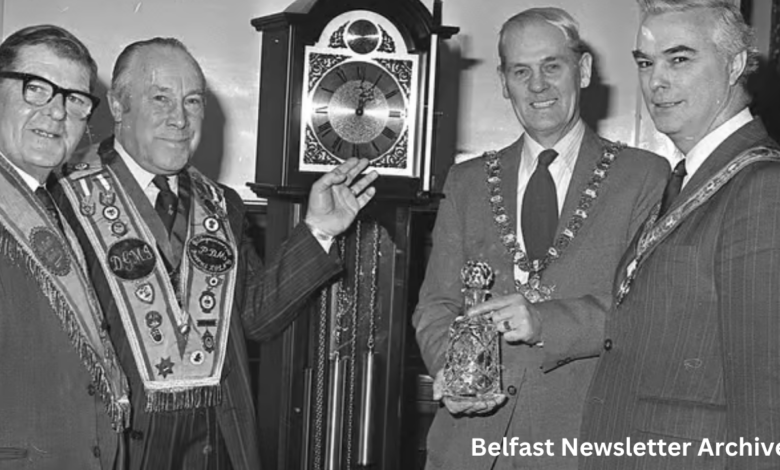
The belfast newsletter archives are among the most valuable historical resources available for anyone interested in the rich heritage of Northern Ireland. Whether you are tracing your family history, researching local events, studying political developments, or simply exploring the past, these archives provide an extraordinary collection of newspapers dating back centuries.


As one of the oldest continuously published English-language newspapers, the Belfast Newsletter has documented major historical moments, everyday life, business developments, births, marriages, deaths, and countless community stories. Today, many of these editions have been preserved through digital archives and library collections, making them far more accessible than ever before.
This guide explains everything you need to know about the belfast newsletter archives, including what they contain, how to search them efficiently, why they matter for genealogy and historical research, and where you can access reliable collections online.
Understanding the History Behind the Belfast Newsletter
The Belfast Newsletter first appeared in 1737, making it one of the oldest newspapers still associated with the United Kingdom. Over hundreds of years, it chronicled political changes, industrial growth, social movements, cultural developments, and international events from a uniquely Northern Irish perspective.
Unlike modern news platforms that focus primarily on current events, historical newspapers provide a snapshot of everyday life. They preserve advertisements, public notices, court reports, shipping schedules, business announcements, and personal milestones that rarely appear in traditional history books.
Because of its long publication history, the newspaper has become an essential source for historians, students, researchers, journalists, and genealogists.
Why the Belfast Newsletter Archives Matter
Historical newspapers are far more than collections of old articles. They serve as primary historical sources that allow readers to understand how people lived during different periods.
The belfast newsletter archives offer firsthand accounts of significant events rather than later interpretations. Researchers can compare reporting styles, analyze changing public opinions, and discover forgotten stories that shaped local communities.
For families researching their ancestry, archived newspapers often reveal details unavailable in official government records. Wedding announcements, obituary notices, business advertisements, military service updates, and community achievements frequently appear throughout the newspaper’s extensive history.
What Information Can You Find?
One of the greatest strengths of historical newspaper archives is the incredible variety of information they contain.
Readers often discover detailed reports covering local government decisions, economic developments, educational reforms, sporting events, entertainment, agriculture, and transportation.
The archives also include valuable personal records that may help individuals build family trees or reconstruct historical timelines.
Among the most commonly searched records are birth announcements, marriage notices, death notices, obituary articles, estate information, legal announcements, public auctions, military reports, property sales, and business advertisements.
Researchers also appreciate editorials and opinion pieces because they reflect public attitudes during different historical periods.
Genealogy Research Using Historical Newspapers
Family history researchers frequently turn to archived newspapers after reaching limitations with census records or civil registrations.
Newspaper collections often provide personal stories that official documents cannot. An obituary, for example, may include information about parents, siblings, occupations, military service, religious affiliations, and community involvement.
Marriage announcements sometimes identify extended family members, while business advertisements can reveal where ancestors worked or operated local companies.
The belfast newsletter archives have become especially valuable because many families from Northern Ireland emigrated throughout the eighteenth, nineteenth, and twentieth centuries. These records help descendants reconnect with their ancestral roots.
Digital Access Has Changed Historical Research
Only a few decades ago, researching historical newspapers required traveling to libraries and manually reviewing reels of microfilm.
Today, digitization has transformed access to historical records.
Many archived editions have been scanned into searchable databases that allow users to locate names, locations, dates, and topics within seconds.
Optical Character Recognition technology has made keyword searching much easier, although very old newspapers occasionally contain scanning errors because of historical printing styles.
Digital archives continue expanding as preservation projects scan additional editions every year.
How to Search Newspaper Archives Efficiently
Searching historical newspapers successfully requires patience and flexibility.
Older newspapers frequently used different spelling conventions, abbreviations, and formatting than modern publications.
Searching multiple variations of a surname often produces better results than relying on one spelling.
Including approximate dates, towns, occupations, or family members can significantly narrow search results.
Researchers should also remember that names were occasionally abbreviated, especially in announcements and advertisements.
When searching decades-old newspapers, broad searches usually uncover more useful information than highly specific queries.
Libraries and Institutions That Preserve Historical Newspapers
Several respected organizations have invested considerable effort into preserving historical newspapers for future generations.
Libraries continue protecting fragile printed editions through conservation projects, while archives digitize newspapers to reduce physical handling.
Academic institutions also contribute by indexing collections and improving search capabilities.
National libraries, university libraries, local heritage centers, and archival organizations often cooperate on preservation initiatives that ensure historical newspapers remain accessible for researchers worldwide.
Using Archived Newspapers for Academic Research
Students and scholars regularly rely on newspaper archives as primary research materials.
Unlike textbooks, newspapers capture public reactions as events unfold.
Researchers studying political history may examine election coverage.
Economists might analyze commercial advertisements.
Social historians often investigate public health campaigns, educational reforms, labor movements, and immigration patterns through archived newspapers.
Because newspapers reflect contemporary viewpoints, they help researchers understand historical contexts rather than relying solely on retrospective interpretations.
Exploring Local Community History
Historical newspapers preserve countless stories that never appeared in national history books.
Readers can discover reports about village celebrations, church activities, sporting competitions, charitable organizations, school events, agricultural exhibitions, and local businesses.
These seemingly ordinary articles collectively create an incredibly detailed picture of community life across generations.
For local historians, archived newspapers provide unmatched insight into how neighborhoods developed over time.
Preservation Challenges
Maintaining centuries-old newspapers presents significant challenges.
Paper naturally deteriorates due to age, humidity, sunlight, and handling.
Archivists carefully stabilize fragile editions before digitization begins.
High-resolution scanning preserves both text and original layouts while reducing future physical wear.
Modern preservation efforts also involve storing digital copies across multiple secure systems to prevent accidental loss.
These projects require ongoing investment because new technologies continually improve image quality and search functionality.
Benefits for Journalists and Writers
Historical newspaper collections provide excellent background material for authors, journalists, filmmakers, and documentary producers.
Archived editions offer authentic language, historical advertisements, period-specific expressions, and firsthand reporting that help create historically accurate content.
Writers researching novels set in Northern Ireland often consult archived newspapers to understand daily life during specific decades.
Authentic newspaper accounts frequently inspire compelling story ideas that modern publications have long forgotten.
Verifying Historical Information
Although newspapers are valuable historical sources, researchers should always verify important facts using multiple references.
Reporters occasionally made mistakes, particularly when covering rapidly developing events.
Names could be misspelled, dates incorrectly printed, or rumors mistakenly reported.
Combining newspaper research with census records, church registers, civil registrations, military documents, and official government records produces the most reliable historical conclusions.
Cross-referencing multiple sources strengthens the accuracy of genealogical and academic research.
The Future of Historical Newspaper Archives
Digitization continues transforming access to historical newspapers around the world.
Artificial intelligence now assists archivists by improving text recognition, restoring damaged pages, and organizing searchable databases.
Future technologies may enable even faster searches across millions of newspaper pages while preserving delicate originals.
As more historical collections become digitally available, researchers will gain access to information that was previously difficult or impossible to locate.
The belfast newsletter archives will likely remain an important resource for historians, educators, students, genealogists, and anyone interested in understanding Northern Ireland’s past.
Conclusion
The belfast newsletter archives represent far more than a collection of old newspapers. They preserve centuries of history, documenting the lives, achievements, struggles, and stories of countless individuals and communities across Northern Ireland.
Whether your goal is researching family history, exploring local heritage, supporting academic work, or satisfying personal curiosity, these archives provide an invaluable window into the past. Thanks to ongoing preservation and digitization efforts, historical newspapers continue becoming more accessible to readers around the world.
By learning how to search effectively, verify information carefully, and explore multiple historical sources, researchers can unlock remarkable discoveries that deepen their understanding of both personal ancestry and regional history.
Frequently Asked Questions
What are the Belfast Newsletter archives?
The Belfast Newsletter archives are preserved collections of historical editions of the Belfast Newsletter newspaper. They include news articles, advertisements, obituaries, public notices, and many other historical records dating back hundreds of years.
Where can I access the Belfast Newsletter archives?
You can access archived editions through major library collections, historical newspaper databases, university libraries, and official archival institutions that preserve Northern Ireland’s newspaper history.
Are the Belfast Newsletter archives useful for genealogy?
Yes. The archives contain birth announcements, marriage notices, obituaries, business advertisements, and community news that can help researchers trace family histories and discover information unavailable in official records.
Can I search the archives online?
Many historical editions have been digitized and are searchable online through subscription databases and participating libraries. Digital access varies depending on the collection and publication year.
Why are historical newspaper archives important?
Historical newspapers preserve firsthand accounts of past events, providing valuable insight into politics, society, culture, local communities, and everyday life. They remain essential resources for researchers, historians, students, and family history enthusiasts.