Eduardo Tamayo: The Man Behind the Political Earthquake That Shook Madrid
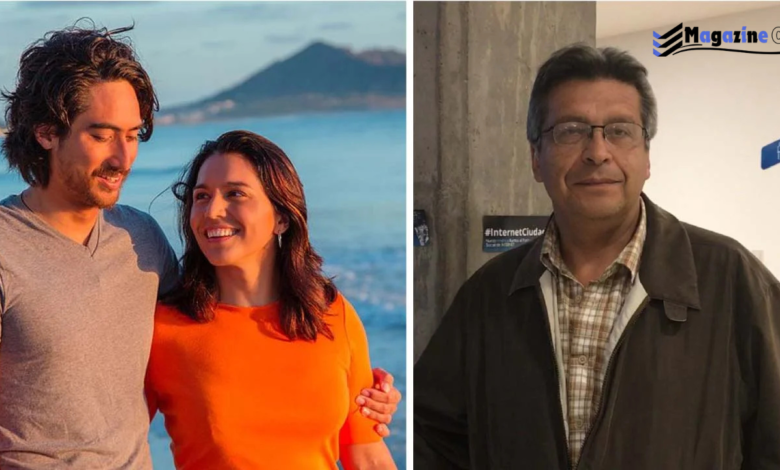
Eduardo Tamayo: Some names in politics fade away quickly, but others become permanent fixtures in history books, whispered in university lecture halls, and referenced whenever political betrayal is discussed. Eduardo Tamayo belongs firmly in the second category. If you lived in Spain during the early 2000s, you remember exactly where you were when the news broke. The “Tamayazo” scandal, as it came to be known, was not just a minor political hiccup; it was a full-blown earthquake that reshaped the political landscape of the Community of Madrid and left the Spanish Socialist Workers’ Party (PSOE) in utter disarray.


But who exactly is Eduardo Tamayo? Is he just a villain in a political thriller, or is there more to the story than the headlines suggested back in 2003? The answer, as with most things in life, is complicated. He was a lawyer, a party insider, a man who climbed the ranks of the PSOE only to become its most famous traitor. He was a deputy who refused to show up for a vote, and then he refused to leave. To understand modern Spanish politics, you actually have to understand Eduardo Tamayo. He is a cautionary tale about ambition, factionalism, and how one single person can change the course of a region’s history with nothing more than a pen and a seat in an empty chamber.
The Many Faces of a Name: Separating Fact from Fiction
Before we dive into the political firestorm, we have to clear up a major point of confusion. The name “Eduardo Tamayo” is surprisingly common across different fields and continents. If you search for him online, you will find at least five completely different human beings sharing the same name. There is the Chilean rodeo champion, a legend in his own right with seven national titles. There is an American businessman who was once married to politician Tulsi Gabbard. There is a respected medical researcher publishing papers on sepsis and cardiac surgery. There is even a Colombian dancer and choreographer based in Barcelona.
But the Eduardo Tamayo we are here to talk about is the Spanish politician. The one born in Córdoba in 1959. The one who brought the Madrid Assembly to its knees. It is crucial to distinguish between these figures because their stories are wildly different. Confusing the Spanish politician with a Chilean horse rider or an American entrepreneur would be like comparing apples to spaceships. Our Eduardo Tamayo is a lawyer by training and a political operative by trade, and his legacy is written in the parliamentary records of the Asamblea de Madrid.
Eduardo Tamayo Net Worth: The Financial Reality of a Fallen Politician
When people search for “Eduardo Tamayo net worth,” they are often looking for a scandalous number, assuming that political betrayal must come with a hefty price tag. The reality is more mundane and, in some ways, more frustrating. Unlike the American businessman who is estimated to have a net worth of around one million dollars, Eduardo Tamayo, the politician, is not a man of immense wealth. His fortune, such as it is, comes from his legal background and his later work in the private sector.
After his expulsion from politics and the failure of his new party, “Nuevo Socialismo,” Tamayo returned to a more traditional profession. Reports indicate he works as an executive for a construction company called Prefabricados y Obras Zarza, a firm with business interests in Venezuela and Equatorial Guinea. This likely provides him with a comfortable, upper-middle-class lifestyle, but we are not talking about yachts or private islands. The “Eduardo Tamayo net worth” conversation is often a search for proof of bribery, but interestingly, despite the intense investigations that followed the Tamayazo scandal, no conclusive financial smoking gun was ever found linking him to massive illicit payments.
Early Life and Education: The Making of a Political Animal
To understand why Eduardo Tamayo did what he did, we have to look at where he came from. He was born on February 2, 1959, in Peñarroya-Pueblonuevo, a municipality in Córdoba, Andalusia. His family was not born into the Madrid elite. They emigrated to the capital around 1964 when Eduardo was just five years old. His father started working in a brewery, and through that work, he became involved in leftist politics, eventually joining the PSOE while it was still illegal under Franco’s regime. Politics was in his blood from the dinner table upwards.
Young Eduardo followed in his father’s ideological footsteps but took the professional route. He studied Law at the prestigious Complutense University of Madrid. After graduating, he worked as a practicing lawyer (letrado en ejercicio) from 1986 until July 1999. He was not just a dreamer; he was a man with a sharp, legal mind. He officially joined the PSOE in 1985, the same year he finished his law degree. For nearly two decades, he was the model party member, working his way up through the ranks of the Federación Socialista Madrileña (FSM) with a mix of diligence and internal politicking.
The Rise Through the Ranks: Loyalty and Leadership
Eduardo Tamayo did not just join the party; he immersed himself in its machinery. He held several significant secretarial roles within the FSM. He was appointed Secretary of Education and Culture, then Executive Secretary, and eventually Secretary of the Environment. These were not ceremonial titles; they required him to manage policy, mediate disputes, and prove his loyalty to the party leadership. He also served as the Secretary General of the Socialist group in La Cabrera, a municipality north of Madrid.
He was known as a “Renovador por la base” (Renovator from the base), a faction that sought to change the direction of the party from within. He was closely aligned with José Luis Balbás, a politician who had switched from the UCD to the PSOE. In June 2002, Tamayo was appointed to the FSM Electoral Committee, responsible for monitoring and analyzing electoral strategies. By the time the 2003 regional elections rolled around, he was considered a reliable, if somewhat combative, insider. He was placed at number 13 on the list of candidate Rafael Simancas, a position that was almost guaranteed to win him a seat in the Assembly.
The 2003 Election: A Perfect Storm Brewing
The regional elections of May 25, 2003, were intense. The Popular Party (PP) won the most votes, securing 55 seats in the 111-seat Asamblea de Madrid. The PSOE came in second with 47 seats, and the United Left (IU) held the balance with 9 seats. Mathematically, a coalition between the PSOE and IU would give the left a narrow majority of 56 seats, just enough to block the PP from governing. This was the plan. Rafael Simancas was poised to become the next president of the Community of Madrid.
For a left-leaning politician like Eduardo Tamayo, this should have been a moment of triumph. He had a seat at the table. He was about to be part of a historic government. However, cracks began to appear immediately. Tamayo had a visceral objection to allying with the United Left. He disagreed with the pact, viewing it as a betrayal of the PSOE’s centrist identity. While the party brass celebrated the impending deal, Tamayo was quietly sharpening his knife, preparing to act on his convictions in a way that no one expected.
The Infamous Vote: June 10, 2003
This is the moment that defined Eduardo Tamayo forever. On June 10, 2003, the Asamblea de Madrid convened for the first time after the elections to elect a new President. The PP candidate, Esperanza Aguirre, was a formidable opponent, but the math favored Simancas—provided every single PSOE and IU member showed up to vote. They did not. Eduardo Tamayo and another deputy, María Teresa Sáez Laguna, were absent.
Their absence dropped the PSOE-IU coalition from 56 votes to 54, while the PP held steady at 55. The PP’s candidate for President of the Assembly, Concepción Dancausa, won. It was a stunning, immediate reversal of fortune. The left had lost control of the Assembly presidency before they could even start governing. Tamayo later claimed he was “justifying” his opposition to the IU pact, but the political world saw it for what it was: sabotage. The “Tamayazo” had begun.
Aftermath and Expulsion: No Going Back
The reaction was swift and brutal. The PSOE leadership, led by a furious Rafael Simancas, accused Tamayo and Sáez of being traitors. They alleged that the two deputies had been bribed by the PP or by real estate interests to destabilize the government. The media went into a frenzy. For days, Tamayo was the most hated man in Spanish leftist politics. On June 23, 2003, he and Sáez finally took possession of their deputy seats—not as Socialists, but as members of the “Mixed Group” (independents).
The PSOE immediately expelled them from the party. But Tamayo did not slink away in shame. He doubled down. He refused to resign his seat, arguing that the people had voted for him, not for the party machine. This led to a constitutional crisis. The Assembly was deadlocked. A commission of investigation was launched to look into the alleged corruption and bribery, but while the investigation dragged on, Madrid was left without a stable government for the entire summer of 2003.
Nuevo Socialismo: The Final Act
Realizing he had no future in the PSOE, Eduardo Tamayo decided to go rogue in the most literal way possible. He and María Teresa Sáez founded their own political party: Nuevo Socialismo (New Socialism). It was a quixotic attempt to rebrand himself as a reformer, a man who had stood up against the corrupt “pact” with the far left. He presented himself as a candidate for the presidency of the Community of Madrid in the snap elections that were inevitably called for October 2003.
The result was a disaster for him, but a victory for stability. Nuevo Socialismo received only 6,185 votes, a minuscule fraction of the electorate. They won zero seats. The scandal that he had created had effectively erased him from the political map. The PP, led by Esperanza Aguirre, won a resounding majority in the repeat election, ending the crisis. Eduardo Tamayo walked away from active politics, his party dissolved, his reputation in ruins, but he walked away a free man.
The Tamayazo: A Timeline of Scandal
To visualize the rapid sequence of events that defined this political crisis, here is a timeline of the key moments in the Eduardo Tamayo story.
| Date | Event | Significance |
| May 25, 2003 | Regional Elections | PSOE wins 47 seats, IU wins 9; left coalition possible with 56 seats. |
| June 10, 2003 | Assembly Inauguration | Tamayo and Sáez are absent; PP wins presidency of the Assembly. |
| June 23, 2003 | Seats Claimed | Tamayo takes his seat as an independent; expelled from PSOE immediately. |
| Summer 2003 | Political Deadlock | Investigations begin; Madrid remains in governmental limbo. |
| October 2003 | Snap Elections | Tamayo runs “Nuevo Socialismo,” receives only 6,185 votes; loses badly. |
| Post-2003 | Political Exile | Tamayo leaves politics, works in construction sector. |
Life After Politics: The Construction Executive
Where is Eduardo Tamayo now? This is a question that still pops up on Spanish forums and political blogs. After the failure of Nuevo Socialismo, Tamayo effectively retired from the public eye. He returned to his roots in business and law. Reports from Spanish media indicate that he took a role as a manager (directivo) for a construction firm named Prefabricados y Obras Zarza. This company has notable international ties, working on projects in Venezuela and Equatorial Guinea.
This career move is ironic given the accusations that swirled around him during the Tamayazo. He was accused of being in bed with real estate and construction magnates who wanted to prevent a leftist government from regulating urban development. Whether he was “rewarded” with this job for his actions in 2003 is a matter of speculation. There is no hard evidence linking his current employment to the scandal. However, his return to the private sector allowed him to live a quiet life, away from the cameras that had once hunted him through the halls of the Asamblea de Madrid.
Controversy Resurfaces: The 2020 Investigation
Just when it seemed like Eduardo Tamayo had faded into permanent obscurity, his name resurfaced in the news in October 2020. According to reports, the Guardia Civil began investigating Tamayo as part of a larger probe into an alleged extortion ring targeting businessmen in Vigo. He was identified as a potential “responsible” figure in a network that was pressuring entrepreneurs.
It is important to note that “being investigated” is not the same as “being convicted.” As of the latest updates, the legal proceedings are complex and ongoing. However, this development shows that Tamayo’s legal troubles did not end in 2003. His name continues to be linked to murky business dealings, suggesting that the man who blew up the Madrid Assembly may not have left his controversial tactics behind when he left politics. For those tracking the “Eduardo Tamayo net worth” question, these business ties are often cited as the source of his current income.
“El número 13 de la lista de Simancas… ocupó la Vicepresidencia de la Comisión de Economía y Empleo en la anterior legislatura.” (The number 13 on Simancas’s list… served as Vice President of the Economy and Employment Commission in the previous legislature.) – El Mundo, 2003
Legacy: The Tamayazo as a Political Noun
In Spain, the name Eduardo Tamayo has become a shorthand for political betrayal. The term “Tamayazo” entered the Spanish political lexicon permanently. It is used to describe a situation where a politician from a specific party votes against their own party’s interests (or abstains) specifically to topple a government or block a coalition. It implies a conspiracy, a backroom deal, and a shocking lack of party discipline.
The long-term effect of the Tamayazo was the consolidation of PP power in Madrid. The left never recovered from that summer of chaos. If Tamayo had simply voted along party lines, the history of the Community of Madrid might have looked very different. Instead, his “protest” handed the region to the Popular Party for decades. For many political analysts, Eduardo Tamayo is not a hero of conscience; he is a cautionary tale about how personal ambition and factional infighting can destroy the greater good. Yet, he remains a fascinating figure precisely because his motivations remain opaque.
The Psychological Profile: Why Did He Do It?
We have to ask the question: was Eduardo Tamayo a corrupt pawn, or was he a true believer? Those who support the “corruption” theory point to the missing votes and the subsequent job in construction. They argue that Tamayo was bribed to break the leftist coalition. Those who support the “ideologue” theory point to his long history of objecting to the IU coalition. He genuinely hated the communists. He felt that the PSOE was selling its soul.
The truth is likely messier. Tamayo was a “Renovator,” a member of a faction that felt sidelined by Rafael Simancas. His rebellion was as much about internal party power dynamics as it was about policy. By breaking the coalition, he was not just hurting the IU; he was humiliating Simancas. It was a power play. He wanted to prove that he could not be ignored. Unfortunately for him, he proved that he could not be trusted either. The result was political suicide, but for a brief moment in the summer of 2003, Eduardo Tamayo was the most powerful man in Madrid because he held the deciding vote.
Comparison with Other Political Scandals
The Tamayazo has often been compared to similar instances of political “crossing the floor” or “abstention sabotage” in other democracies. In the United States, it might be compared to a “party switch” that flips the majority, though usually, that happens on a longer timeline. In the UK, it resembles the concept of a “whip” being withdrawn, causing a government to lose a confidence vote.
However, the unique aspect of the Tamayazo is the mystery surrounding it. No money was ever conclusively traced. No smoking gun email was found. Tamayo took his secrets to the bank, so to speak. This ambiguity allows his story to persist as an urban legend of Spanish politics. Was it greed? Spite? Ideology? Everyone has a theory, but only Eduardo Tamayo knows the real answer. This enduring mystery is why people still search for “Eduardo Tamayo net worth,” hoping to find a financial trail that leads to a massive payoff, but that trail remains stubbornly cold.
Personal Life and Privacy
Unlike many politicians who thrive on attention, Eduardo Tamayo has always guarded his private life fiercely. He is married and has children, though specific details about his family are deliberately kept out of the public domain. After the intense media scrutiny of 2003 and 2004, he learned to value anonymity. He rarely gives interviews. He does not have a flashy social media presence.
This privacy stands in stark contrast to the public nature of his crime. He blew up a government in broad daylight, but he refuses to let the public see inside his home. This dichotomy is frustrating for journalists but understandable for a man who has been publicly vilified. Whether you see him as a villain or a victim of a corrupt party system, Eduardo Tamayo has decided that his story will not be exploited for reality TV or tell-all books. He has closed the book on his public life, leaving only the legal and historical records behind.
Conclusion
Eduardo Tamayo is one of those rare historical figures who is defined entirely by a single, decisive action. Before June 10, 2003, he was a competent, if unremarkable, regional politician. After June 10, 2003, he became a legend—or a cautionary ghost, depending on your political leanings. The “Tamayazo” is a case study in political science classes across Spain. It teaches students that power does not always lie in the majority; sometimes, it lies in the one person willing to stay home.
His life after politics has been quieter, marked by legal work and construction management, punctuated by occasional investigations that remind the public he is still around. The question of “Eduardo Tamayo’s net worth” remains secondary to the question of his legacy. You cannot put a price on the chaos he caused. Whether you despise him for betraying the left or admire him (grudgingly) for sticking to his anti-coalition principles, you cannot deny that he changed Madrid. He is a reminder that in politics, the most dangerous person is not the enemy on the other side of the aisle, but the friend sitting right next to you who decides he has had enough.
Frequently Asked Questions
Who is Eduardo Tamayo?
Eduardo Tamayo is a Spanish former politician, lawyer, and businessman. He is best known for being one of the two deputies whose absence in the Asamblea de Madrid on June 10, 2003, prevented the election of a PSOE-IU coalition government, an event famously known as the “Tamayazo”.
What is the Eduardo Tamayo net worth?
Estimating the precise Eduardo Tamayo net worth is difficult because he has maintained a low profile. He is not a billionaire or a major tycoon. His wealth is derived from his former career as a lawyer and his current role as an executive in the construction company Prefabricados y Obras Zarza, which places him in a comfortable, upper-middle-class financial bracket.
What was the Tamayazo scandal?
The Tamayazo refers to the political crisis in the Community of Madrid in 2003. Eduardo Tamayo and another deputy, María Teresa Sáez, refused to vote for the leftist coalition candidate. Their absence allowed the Popular Party to take control of the Assembly presidency, leading to a governmental deadlock and eventual snap elections.
Is Eduardo Tamayo still in politics?
No, Eduardo Tamayo is no longer active in mainstream politics. After being expelled from the PSOE, he formed “Nuevo Socialismo,” which failed to win any seats in the October 2003 elections. He subsequently left the political arena and focused on his career in the private construction sector.
Why is he called a “Renovator”?
Within the PSOE, Tamayo was part of a faction called “Renovadores por la base” (Renovators from the base). This group sought to change the internal structure and policies of the party, often clashing with the leadership of Rafael Simancas. This internal tension was a key motivation behind his rebellion.
Is Eduardo Tamayo related to the Chilean rodeo champion?
No. This is a common point of confusion. The Chilean rodeo champion is named Eduardo Tamayo Órdenes. The Spanish politician is Eduardo Tamayo Barrena. They are two completely different individuals who happen to share a first and last name but have different professions, nationalities, and life stories.